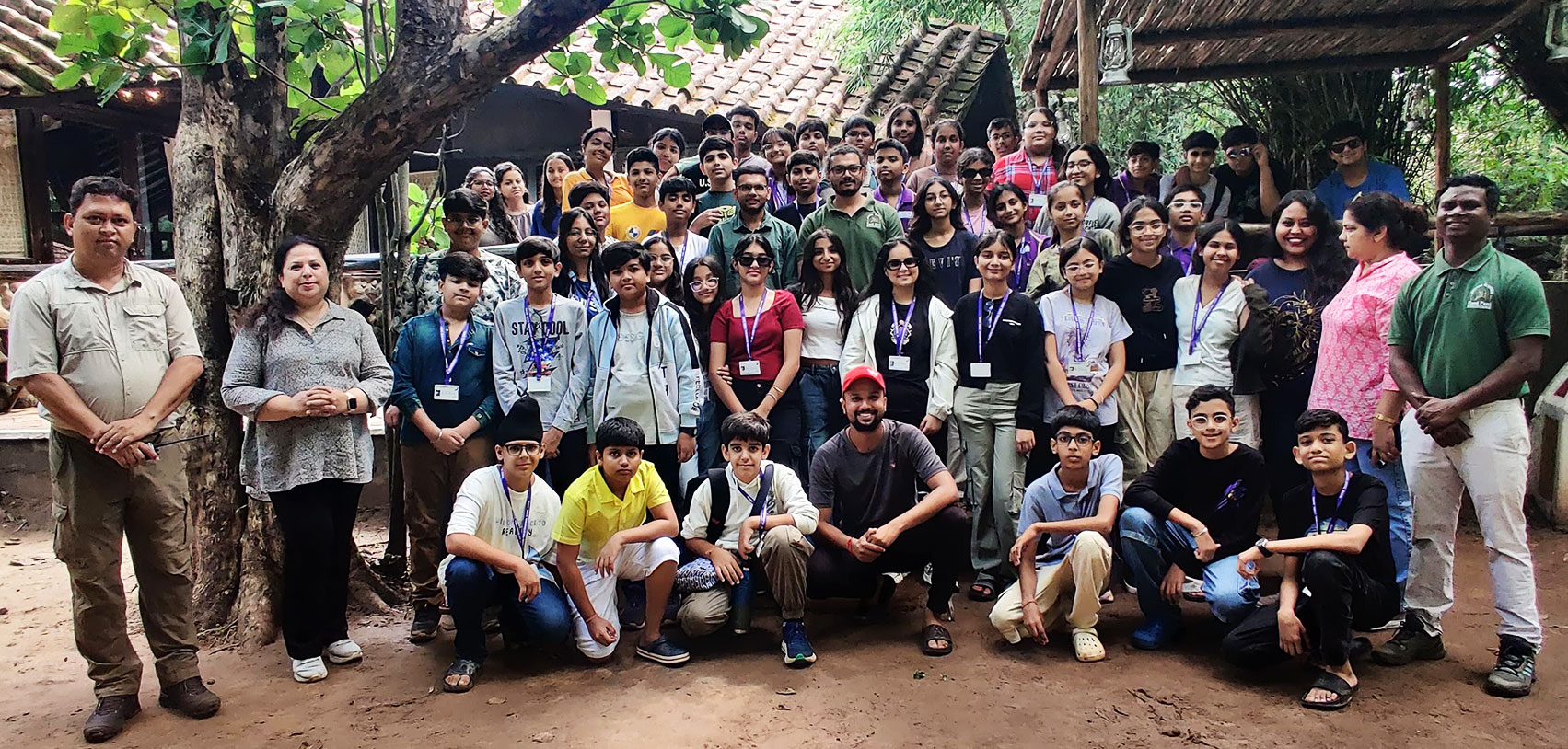
Middle school encompasses Grades 5 to 8 and represents a pivotal transition, where students build on their foundational knowledge from primary school. During these years, the focus shifts to developing social-emotional intelligence, critical thinking, and effective communication skills.

Our aim is to nurture lifelong learners who can confidently engage as thinkers, problem-solvers, and changemakers in a global context.
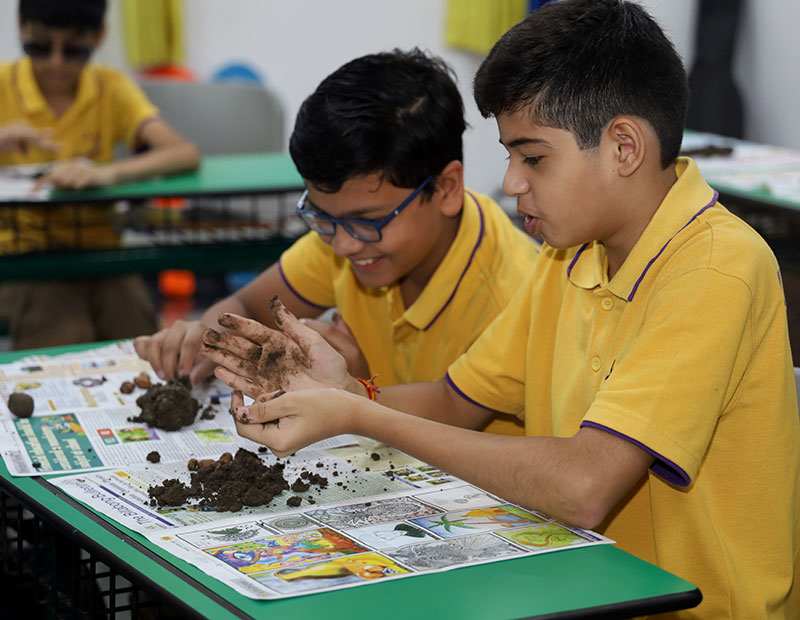
Our primary objective in middle school is to cultivate independent learners who take accountability for their own education. To achieve this:

Students participate in vibrant debates, discussions, and creative projects that address real-world challenges. These engagements foster critical thinking and encourage them to explore diverse perspectives.

Through group projects, students enhance their communication skills and learn to collaborate effectively toward shared goals. This teamwork builds essential interpersonal skills.

Activities are designed to explore the interconnectedness of different subjects, allowing students to see how knowledge applies in various contexts. This holistic approach deepens their understanding of the world around them.

Self-reflection activities empower students to become aware of their thinking processes, encouraging them to take charge of their learning journeys with greater clarity, confidence, and independent decision-making skills.

Regular visits to state-of-the-art science laboratories provide practical experiences that bring scientific concepts to life, fostering curiosity and a deeper understanding of scientific principles.

Our curriculum equips students with the skills needed to thrive in a rapidly evolving digital landscape, preparing them for future opportunities.
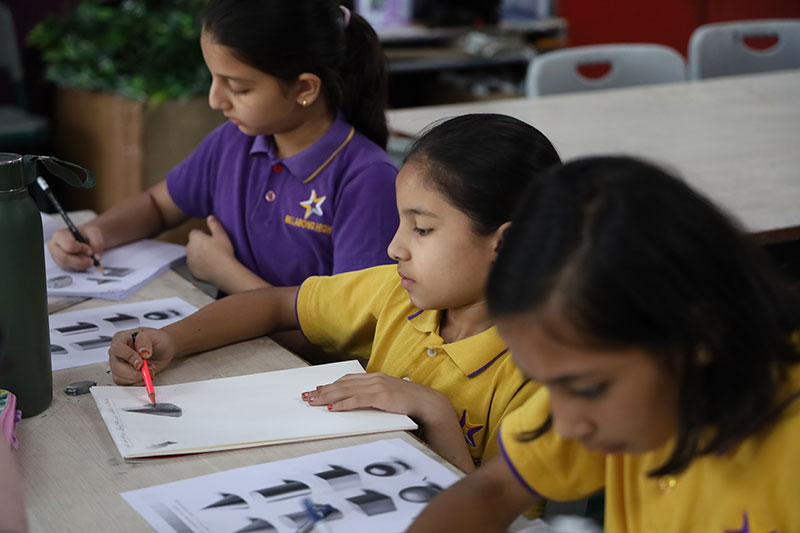
Middle school marks the beginning of summative assessments, such as standardized pen-and-paper tests, to evaluate students on their conceptual and contextual understanding of a subject. These assessments help identify learning gaps, inform instructional adjustments, and prepare students for high school exams. They also provide standardized comparisons and valuable feedback that reinforce retention and deepen understanding.
While familiarizing students with exam formats is important, it is equally essential to assess skills like critical thinking, problem-solving, communication, organization, and collaboration. To support this, students participate in ongoing formative assessments that monitor their progress in a nurturing environment, fostering active engagement in their learning journey.
Our curriculum integrates outcomes from the CAIE, ICSE, and CBSE boards, extending beyond standard syllabi. The methodology is enriched through various approaches:
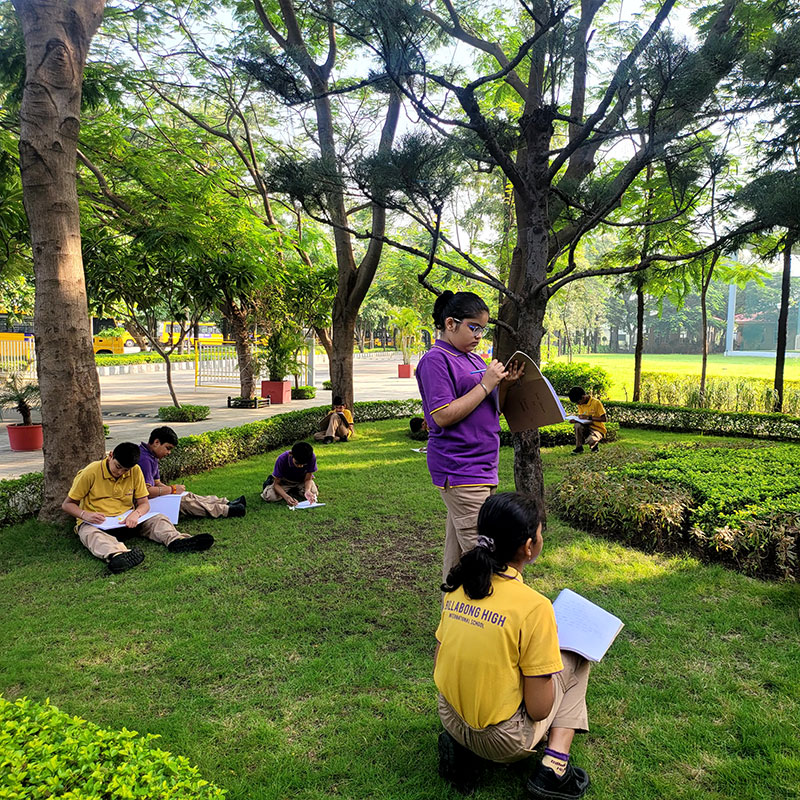
We prioritize SEL, which helps students develop essential self-awareness, self-control, and interpersonal skills. The benefits of SEL include:

SEL helps students learn how to manage their emotions and set achievable goals with confidence, clarity, and a strong sense of self-awareness.

SEL enhances teamwork and conflict resolution abilities, which are important for both academic and personal success and growth.

SEL equips students with tools to articulate their challenges and build self-esteem, especially those with different learning needs.
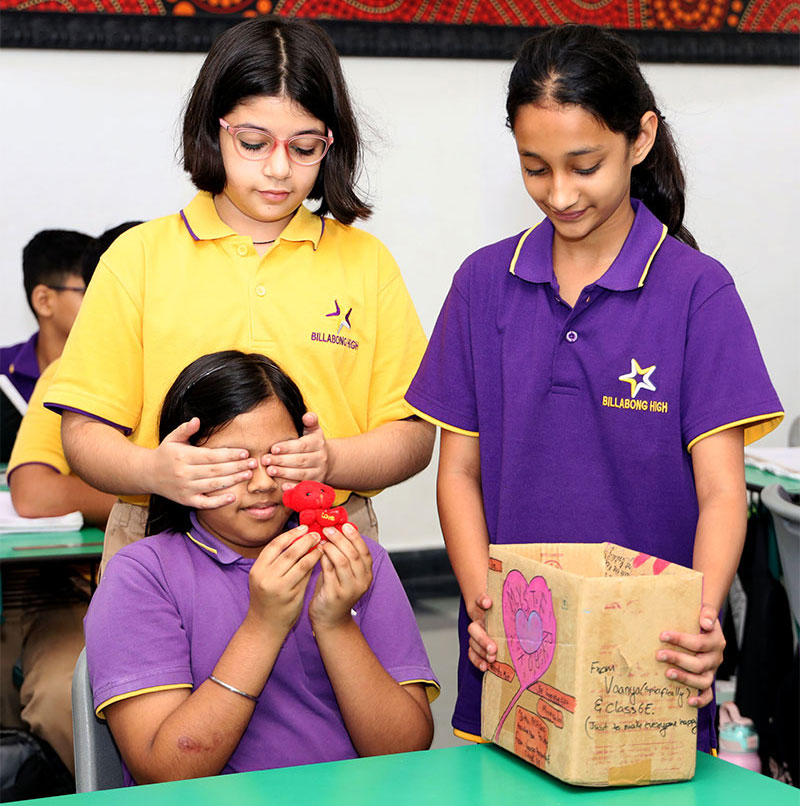
To promote SEL, we implement:
We emphasize the importance of a growth mindset, which encourages students to view challenges as opportunities for growth. Strategies to promote this mindset include:
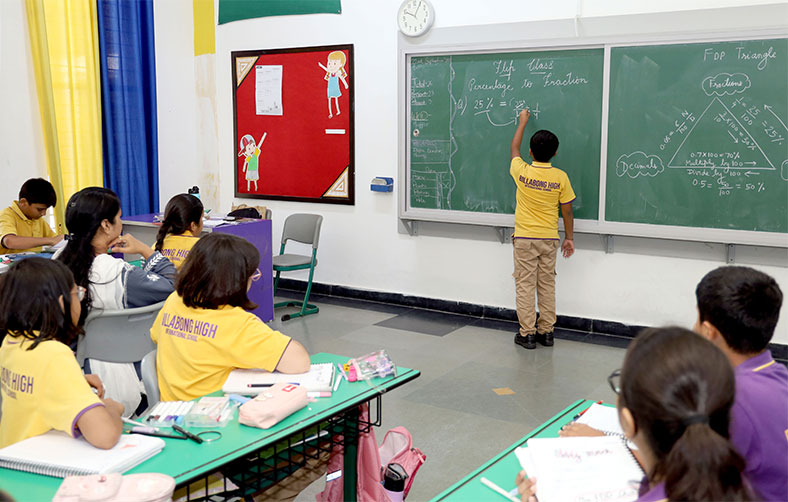
Our Learner-Led Conferences empower students to take ownership of their education. In these conferences: